- Your cart is empty
- Continue Shopping

Mithila AcharPickleVidegha
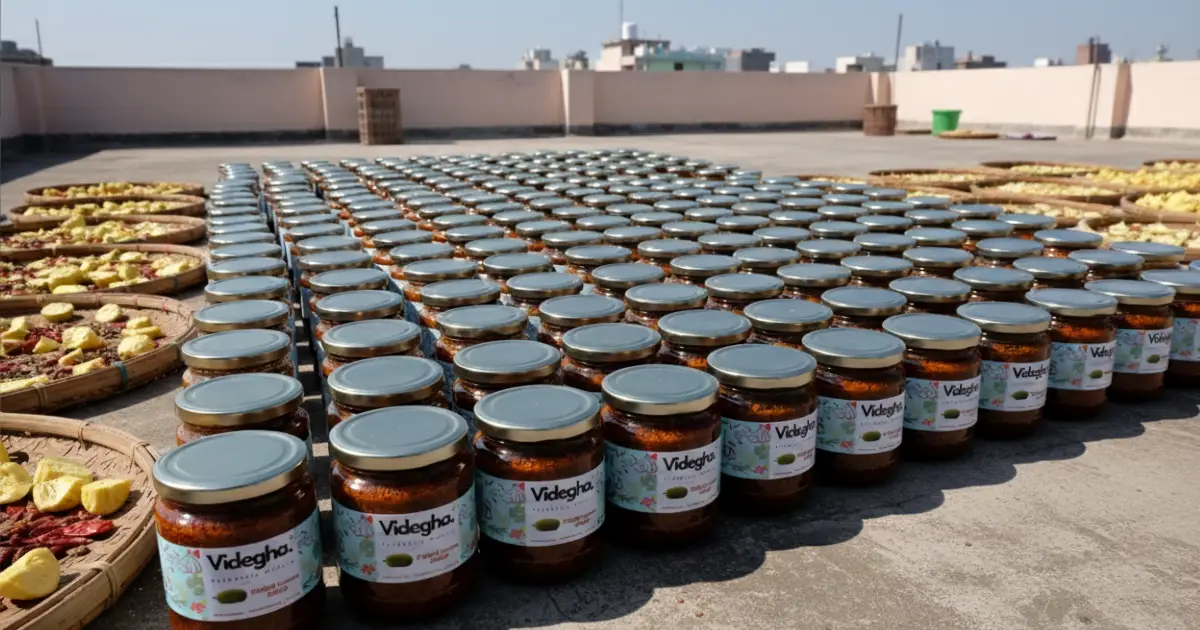
From Terrace Jars to E-Commerce – The Rise of Homemade Achar
-
 By Vikas Jha
 - Posted on
- 0 comments
 By
By Pickle-making in India has always been more than a recipe—it’s a ritual. Families would fill jars with chilies, mangoes, or lemons, leave them on terraces to soak up the sun, and wait patiently as spices matured into bold, tangy flavors. For years, these jars stayed within households, shared only with relatives and friends. Today, however, homemade achar online is one of the fastest-growing categories in the food market. The terrace jar has found its place in the digital age.
Why Homemade Achar is Beating Factory Pickles.
For decades, large companies controlled the pickle shelves in Indian supermarkets. Their products were cheap, uniform, and easy to distribute. But this convenience came at a cost—factory pickles often lacked authenticity, relying on preservatives, and artificial coloring.
Modern consumers are now seeking something different:
- Authentic taste – Recipes passed down for generations, capturing the soul of regional cuisines.
- Healthy promise – Preservative-free pickles with natural ingredients and no shortcuts.
- Artisanal touch – Each jar tells a story of careful preparation, often sun-dried achar made in small batches.
This is why authentic pickles are steadily replacing mass-market products in online carts.
E-Commerce: The New Achar Bazaar.
E-commerce has completely changed how food businesses operate. For homemade pickle brands, digital platforms are the great equalizer. Instead of competing for shelf space in stores, they now compete for clicks.
- Marketplaces like Amazon, Flipkart, and BigBasket make it easy for small achar makers to sell across India.
- Social media marketing—short videos of chilies being stuffed, or lemon achar drying in the sun—creates a powerful emotional connection.
The playing field has never been so open for small entrepreneurs.
The Growing Demand for Artisanal Achar.
The Indian pickle market is expanding year by year, but what’s striking is how much of that growth is being fueled by artisanal achar brands. Urban customers, food enthusiasts, and the Indian diaspora abroad are driving the demand for products that taste like home.
Consumers are not just buying food—they are buying trust, culture, and authenticity. This shift explains why traditional Indian pickles like Lal Mirch Bharwa Achar, Mango Achar, or Gongura Achar are increasingly sought after on online platforms.

Why Homemade Achar Market Will Only Grow?
E-commerce has opened the gates, but the demand itself is the real fuel. With rising interest in clean, natural, and authentic foods, homemade pickle brands have an advantage that no factory can replicate.
- Premium Pricing: Customers are willing to pay more for authentic, preservative-free products.
- Niche Appeal: Regional flavors that never reached retail shelves are now trending online.
- Global Reach: Indians living abroad often search for “authentic achar” to bring a taste of home into their kitchens.
The combination of nostalgia, health-consciousness, and digital accessibility ensures that homemade achar online will keep capturing more of the market.
The Future Belongs to Authenticity
The journey from terrace jars to e-commerce platforms is more than a shift in distribution—it’s a cultural movement. Homemade achar has gone from being a family tradition to becoming a thriving digital business. The market is growing, the demand is clear, and authenticity is the secret ingredient that will keep pushing homemade brands ahead.
In the battle between factory-produced and artisanal achar, it’s the homemade jar that is winning hearts—and carts.
Read This Now – The Chemistry of Homemade Achar: What Really Happens When Spices, Oil, and Sunlight Meet.
